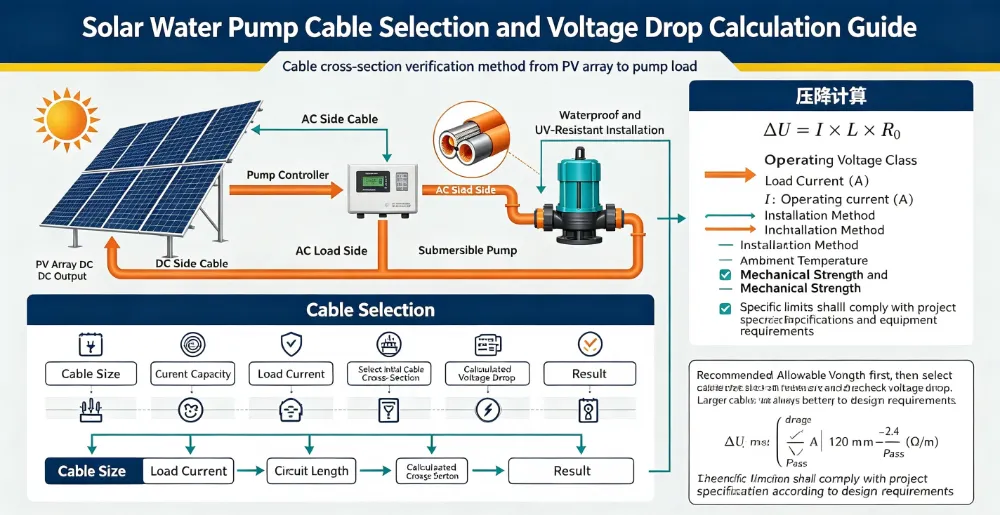
A solar pump system is usually sold on two numbers: the pump's head and its flow. Then it is installed, and a third number quietly decides whether it ever performs as advertised — the cable. Undersized cable is one of the most common and least diagnosed faults in solar pumping. The array is fine, the pump is fine, the controller is fine, and yet the pump runs slow, trips on under-voltage at midday, or fails to start at all in the early morning. The culprit is often a few volts lost in a long, thin run of wire.
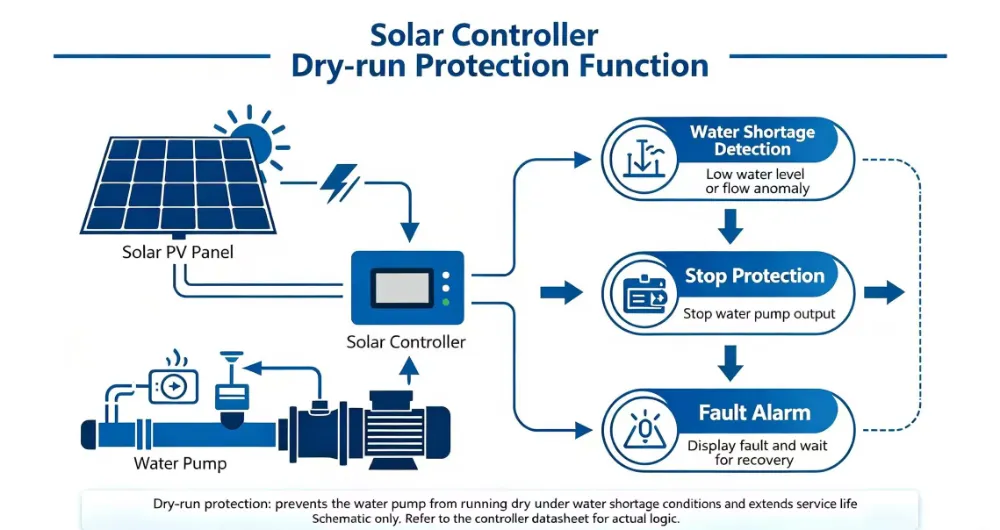
Ask any pump repair shop what kills the most solar pumps and you will get one answer far more often than any other: running dry. A pump that spins without water loses its cooling, its lubrication and its motor in a matter of minutes — sometimes seconds. The good news is that dry run is also the most preventable failure in the whole system.
It is the first question almost every borehole owner asks—and the honest answer is that neither size is automatically better. The right choice is the one that fits your casing, lifts water from your actual water level, and delivers the flow you need at the panel power you can afford. Choose on diameter alone, and you either jam the pump on the way down or pay for a big pump a small well can never feed.
Tanzania’s growing demand for reliable irrigation and livestock water supply is creating strong opportunities for solar water pump adoption. With high solar availability, large agricultural potential, limited rural grid coverage, and rising interest in cost-efficient farming solutions, solar pumping is becoming a practical alternative to diesel-powered systems. This market guide analyzes Tanzania’s key agricultural zones, suitable pump types, import considerations, distribution channels, and product strategies for suppliers and partners entering the East African market.
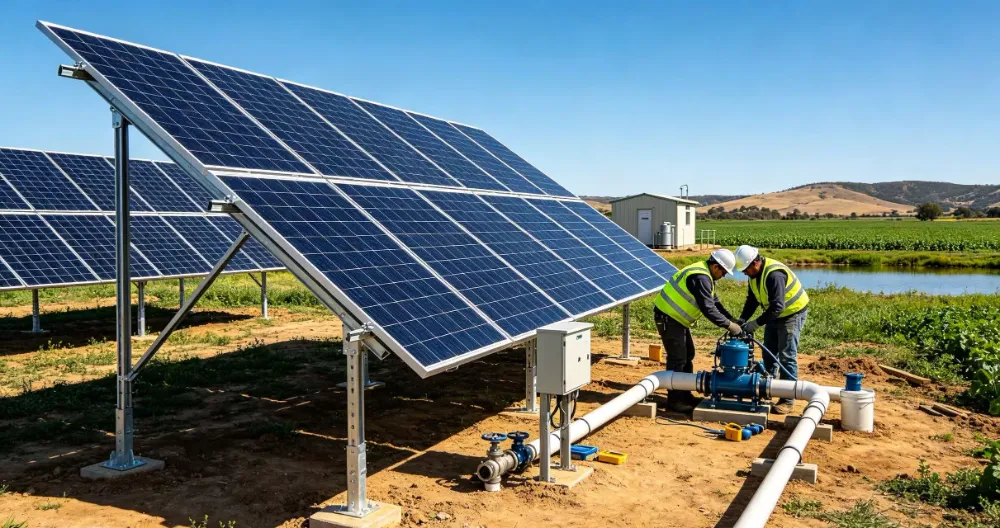
A solar water pump is only as good as its installation. The same pump that runs for years on one farm can fail in a season on the next—almost always because of a shaded panel, a cable that was tied too tight, a string voltage outside the controller's window, or a pump left sitting in sediment.
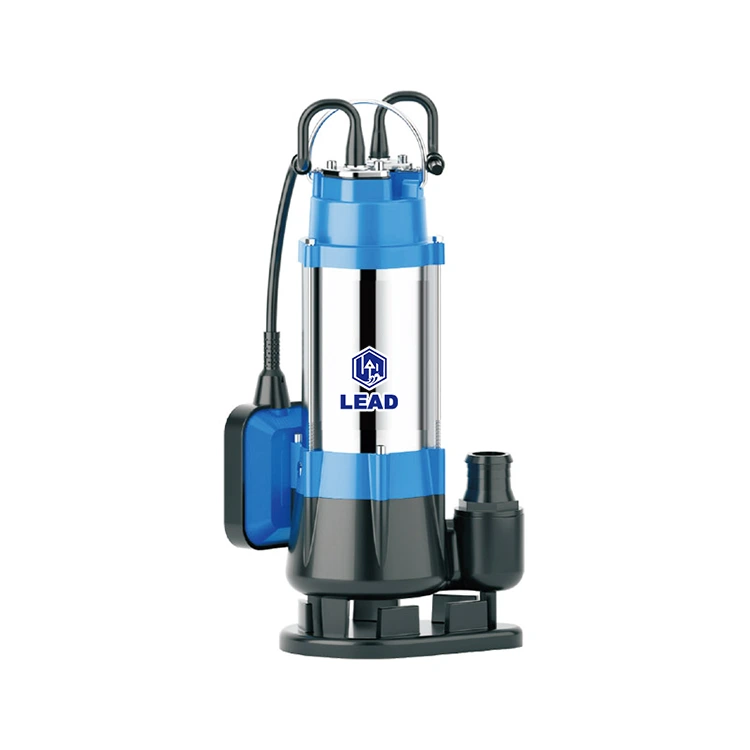
A submersible sewage pump sits at the bottom of the pit and does the job no surface pump can: it moves dirty water — with sand, rags, leaves and other solids in it — from a sump, septic tank, construction pit or wastewater basin to where it needs to go.
We use cookies to offer you a better browsing experience, analyze site traffic and personalize content. By using this site, you agree to our use of cookies. Privacy Policy

 21 2026-10
 16 2026-10
 30 2026-09
 20 2026-09
 16 2026-09
 09 2026-09