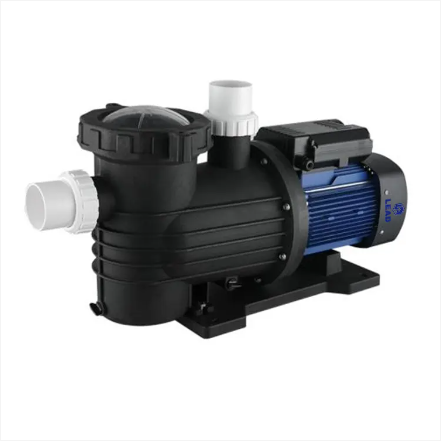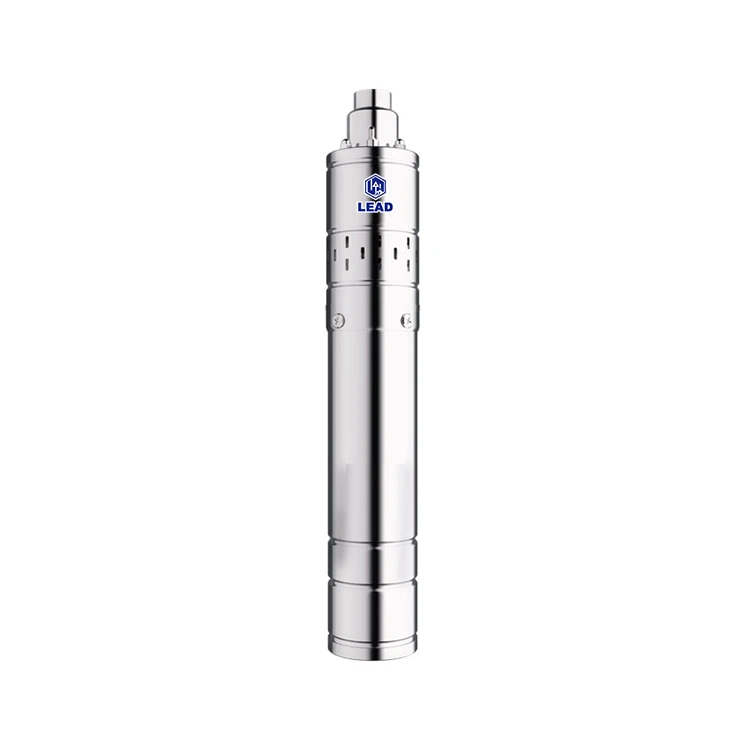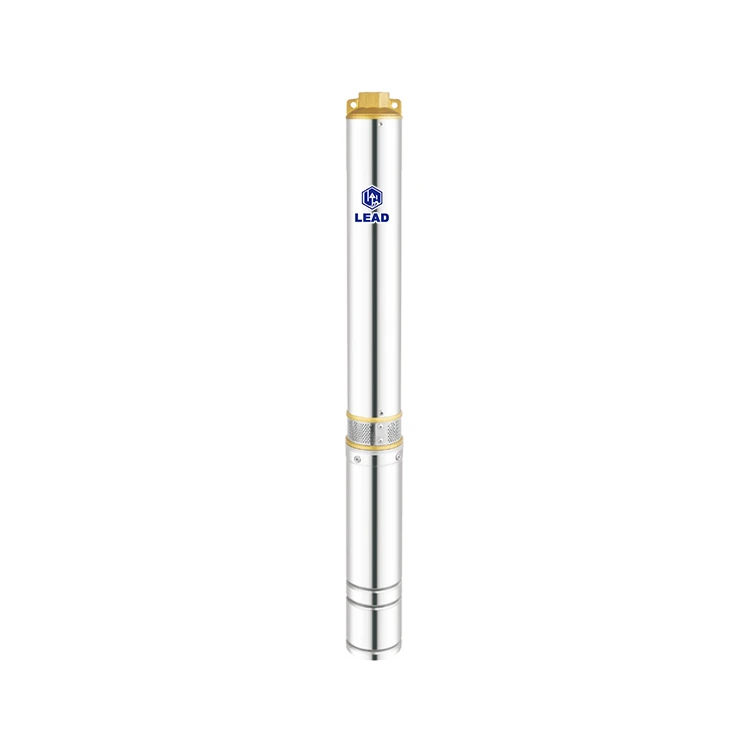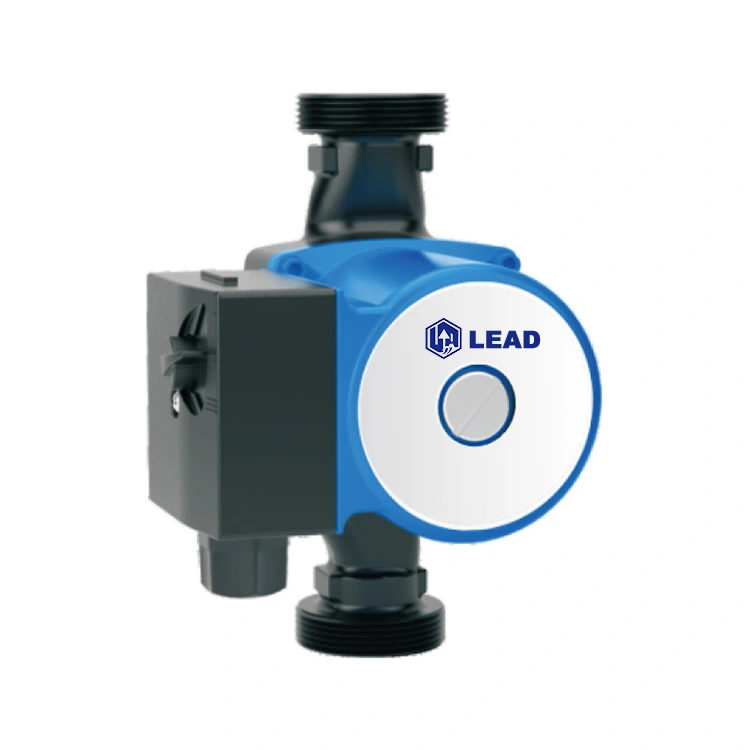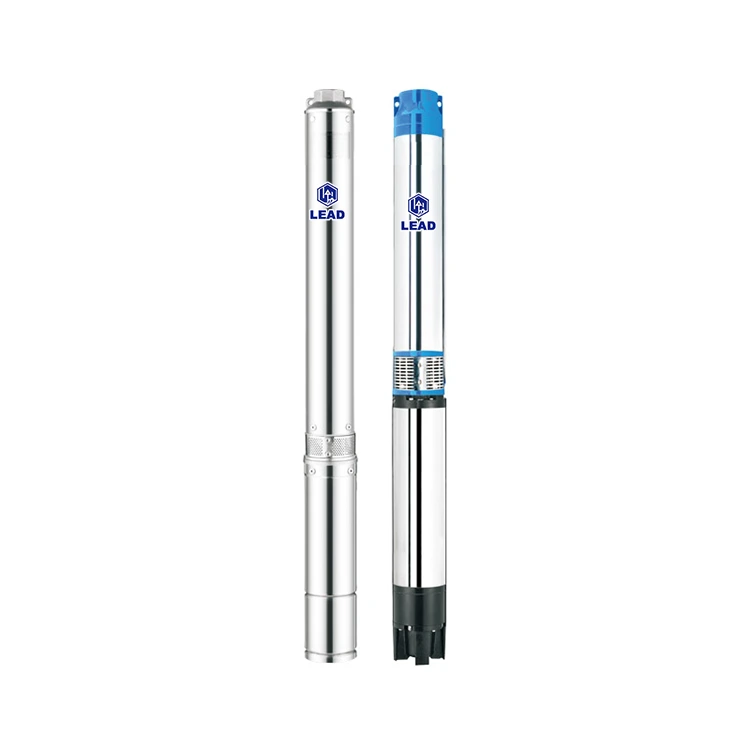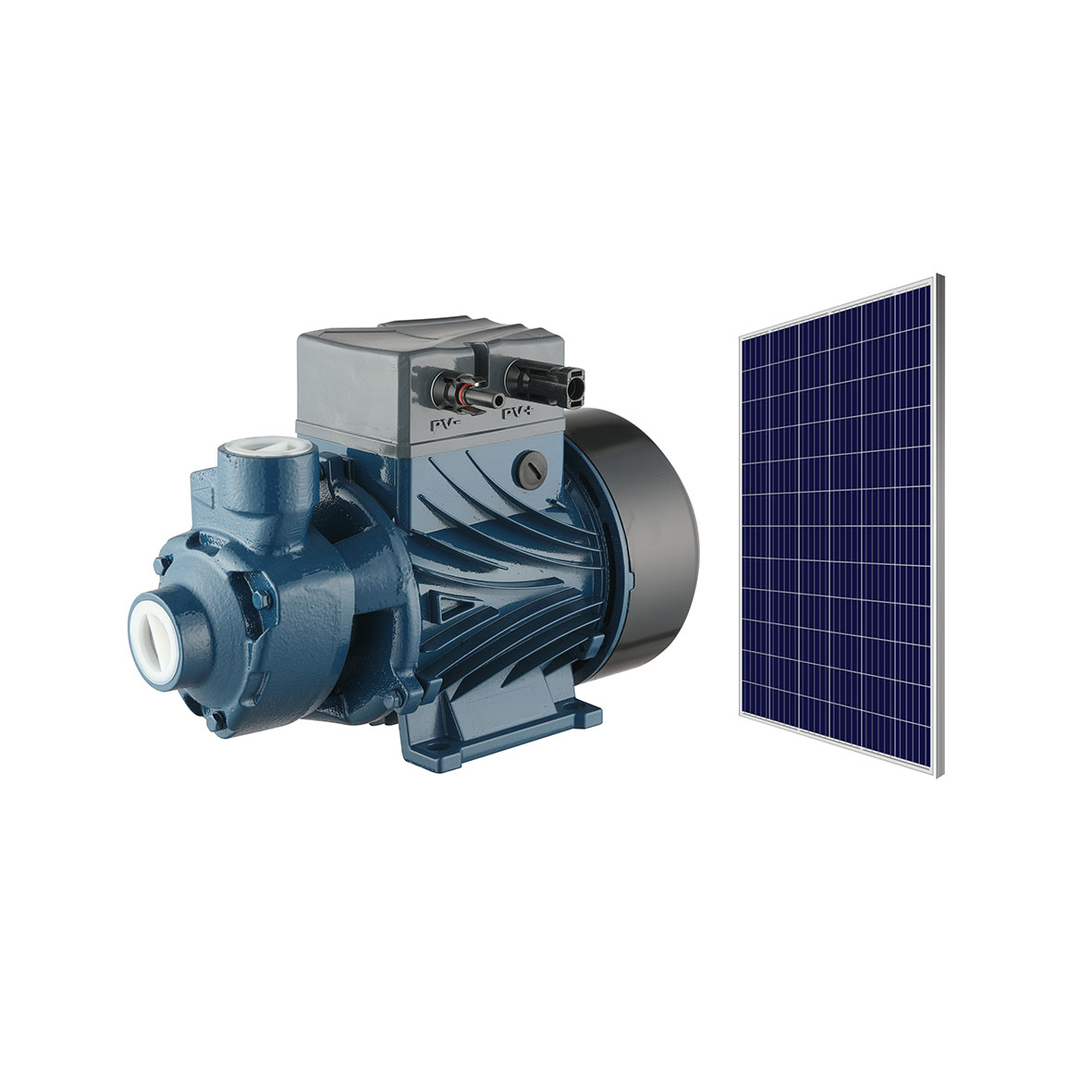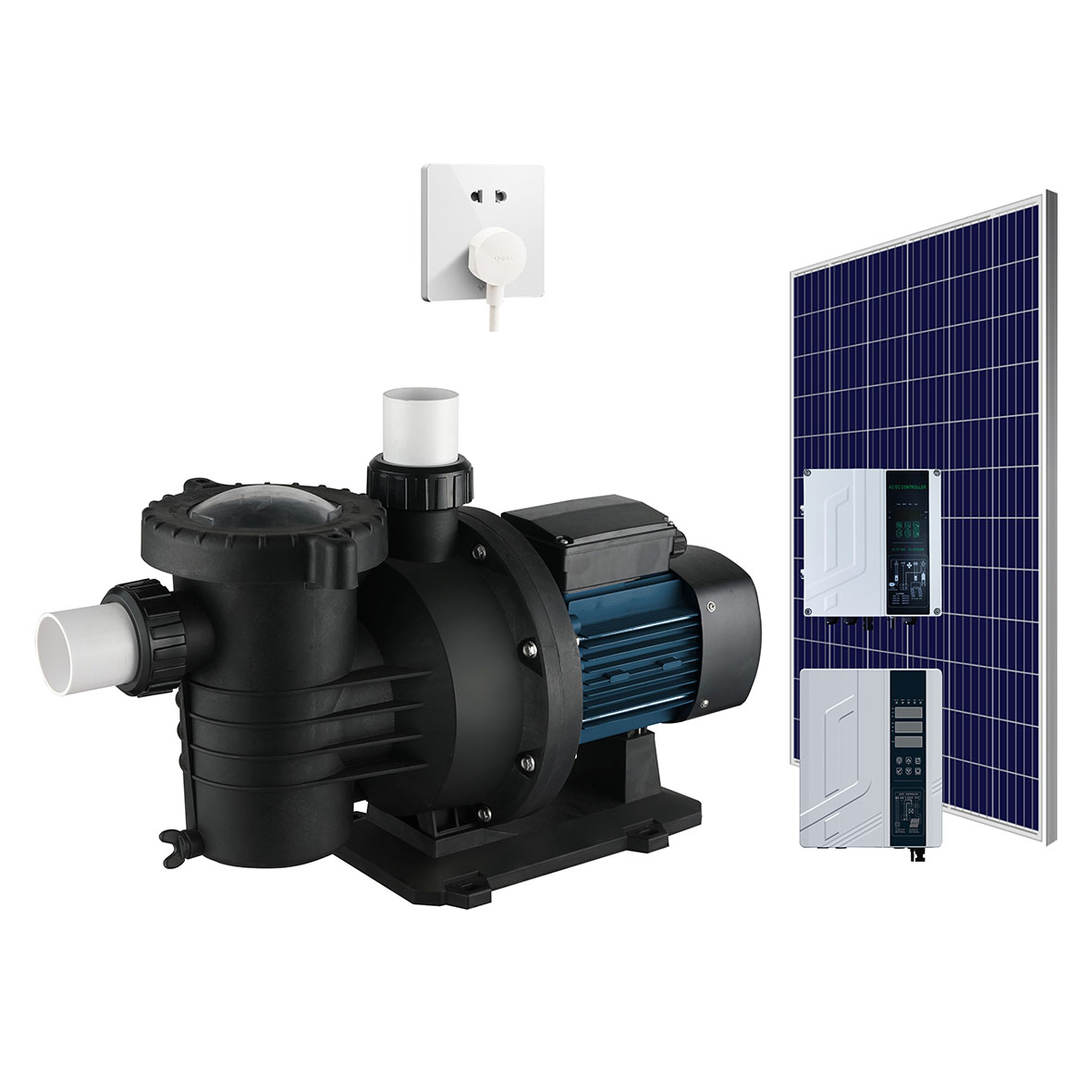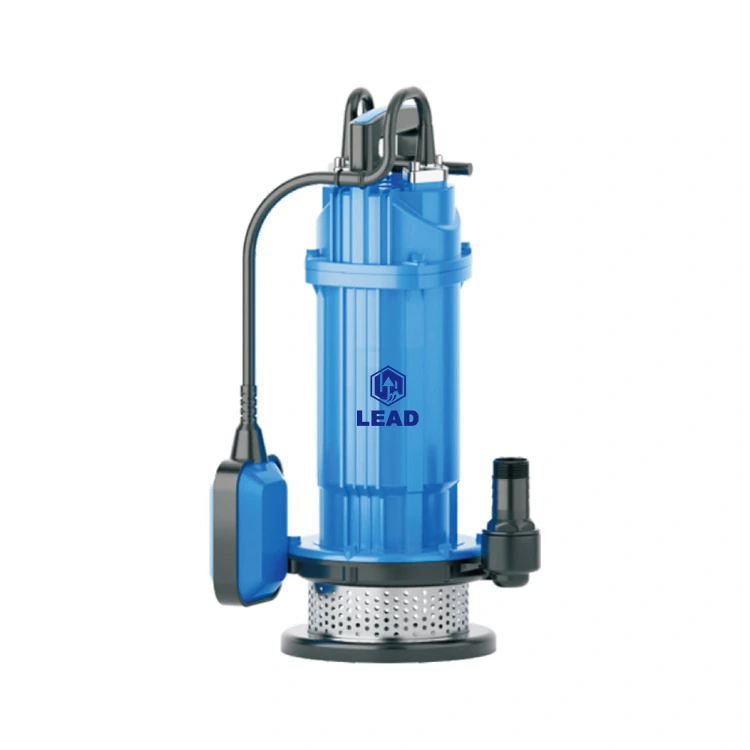
A submersible sewage pump sits at the bottom of the pit and does the job no surface pump can: it moves dirty water — with sand, rags, leaves and other solids in it — from a sump, septic tank, construction pit or wastewater basin to where it needs to go. Lead Pump builds two complementary families: the SWQD series of small single-phase sewage pumps (0.37–1.5 kW) for homes, farms and small sumps, and the WQ series of three-phase industrial sewage pumps (0.75–75 kW, outlets from 1" to 20") for municipal, construction and industrial duty. This guide explains how they work, which models move what, and how to select, install and maintain one so it keeps pumping for years.
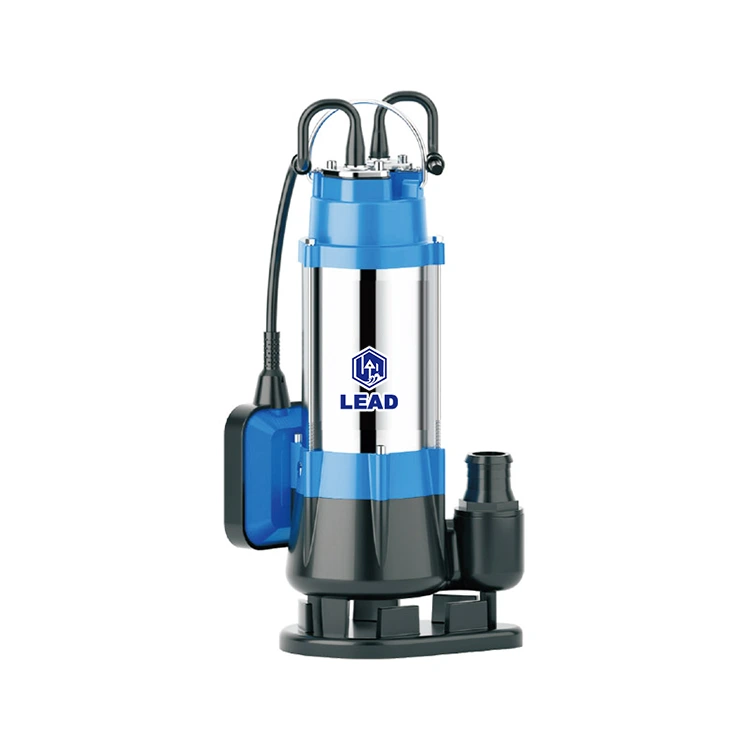
Unlike a clean-water pump, a sewage pump is built to handle water that contains suspended solids. The motor and the hydraulic end are sealed in one unit that is lowered directly into the liquid — no suction pipe, no priming, no air locks. The liquid enters through a strainer at the bottom, passes through an impeller designed to let solids through, and is pushed up the discharge pipe.
· Household and building sumps—basement drainage, laundry and bathroom grey water, septic tank transfer.
· Farm use—draining pits and ditches, moving slurry water and irrigation run-off, emptying manure lagoons.
· Construction and engineering—dewatering excavations and foundation pits full of muddy water.
· Municipal and industrial—sewage lift stations, wastewater treatment plants, water diversion and flood drainage.
· Food and beverage plants—pumping wash-down and process wastewater, with stainless steel (SS316) options where hygiene matters.
The two series share the same idea but are built for different scales. Choosing the right family first makes the rest of the selection easy:
|
Feature |
SWQD series |
WQ series |
|
Power range |
0.37–1.5 kW (0.5–2 HP) |
0.75–75 kW |
|
Phase |
Single-phase as standard (three-phase on request) |
Three-phase, 380 V standard |
|
Outlet size |
1.5" – 2" |
1" – 20" (25–500 mm) |
|
Max. flow |
8.8 – 20 m³/h |
5 – 2,200 m³/h |
|
Max. head |
7 – 17 m |
up to 75 m |
|
Speed |
Two-pole, ~2,900 rpm |
2,900 / 1,450 / 980 / 740 rpm by size |
|
Typical buyer |
Homeowners, farmers, plumbers |
Contractors, municipalities, factories, water utilities |
|
Typical job |
Sump pits, septic tanks, small drainage |
Lift stations, treatment plants, dewatering, flood control |
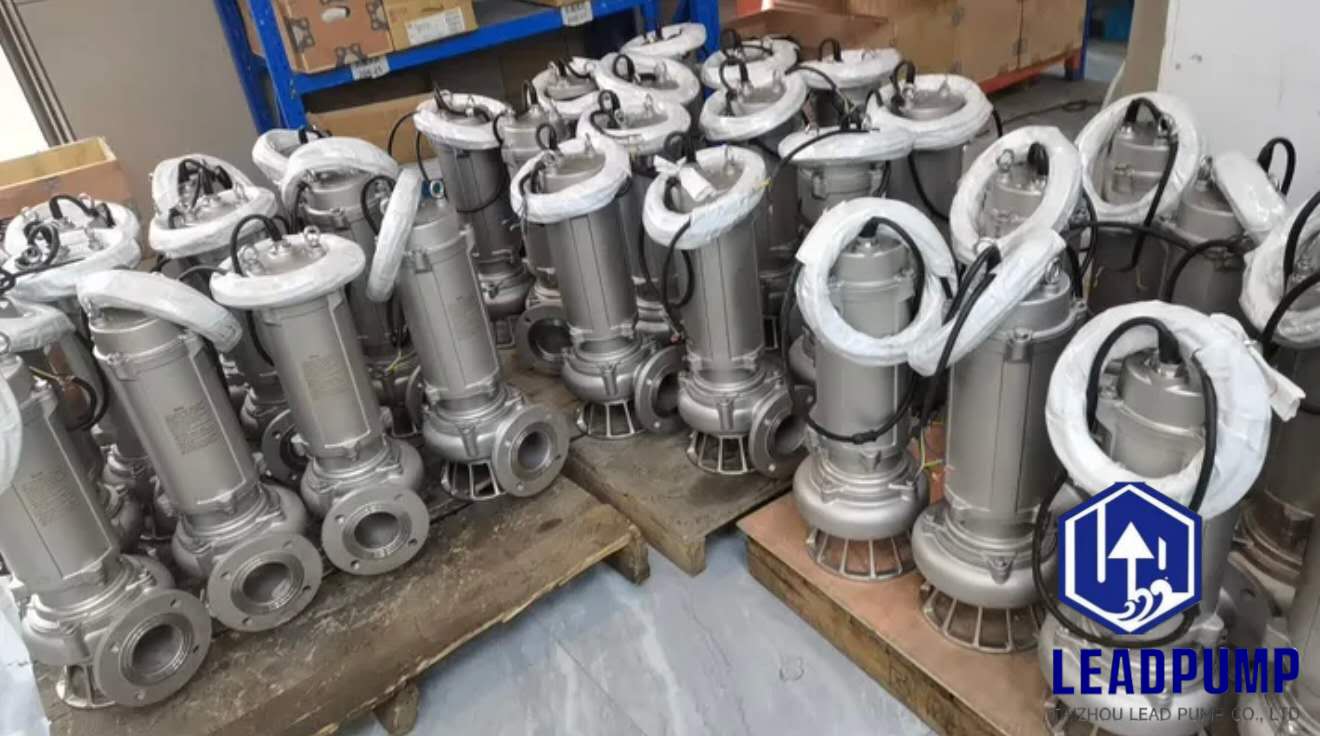
The SWQD range is the plug-and-play answer: 220–240 V single-phase, thermal overload protected, IPX8 rated and ready to drop into a pit with a float switch. The WQ range is a full industrial catalogue: whatever the duty — a 25WQ5-20-0.75 emptying a small pit or a 300WQ800-7-30 moving 800 m³/h in a treatment plant — there is a model for it.
The SWQD series covers the sizes most requested for household and small farm drainage. The number in the model is the rated power in watts (SWQD750F = 0.75 kW); the F suffix marks the automatic float-switch version that starts and stops with the water level:
|
Model |
Port |
Power |
Solids passage |
Max. diving depth |
Max. flow |
Max. head |
|
SWQD370F |
1.5" |
0.37 kW (0.5 HP) |
10 mm |
5 m |
8.8 m³/h |
7 m |
|
SWQD550F |
2" |
0.55 kW (0.75 HP) |
15 mm |
5 m |
12 m³/h |
7 m |
|
SWQD750F |
2" |
0.75 kW (1 HP) |
15 mm |
5 m |
14 m³/h |
9 m |
|
SWQD1100F |
2" |
1.1 kW (1.5 HP) |
15 mm |
5 m |
16 m³/h |
12 m |
|
SWQD1500F |
2" |
1.5 kW (2.0 HP) |
15 mm |
5 m |
20 m³/h |
17 m |
Operating limits and construction:
· Media and ambient temperature: up to +40 °C; pH level 4–10; voltage fluctuation 0.9–1.1 times rated.
· Immersion depth: 0.5 m – 5 m; protection class IPX8.
· Motor: two-pole induction, 100% copper winding, thermal protector on single-phase versions, insulation class B.
· Materials: cast iron pump body and impeller, stainless steel motor housing, ceramic & graphite mechanical seal, 45# steel or stainless steel shaft.
WQ model numbers are a complete specification in themselves: outlet diameter (mm) – WQ – max. flow (m³/h) – max. head (m) – power (kW). Example: 80WQ40-16-4 is an 80 mm (3") outlet pump delivering 40 m³/h at 16 m head with a 4 kW motor. Representative models from across the range:
|
Model |
Outlet |
Max. flow |
Max. head |
Power |
Speed |
|
25WQ5-20-0.75 |
1" |
5 m³/h |
20 m |
0.75 kW |
2,900 rpm |
|
50WQ10-16-1.5 |
2" |
10 m³/h |
16 m |
1.5 kW |
2,900 rpm |
|
80WQ40-16-4 |
3" |
40 m³/h |
16 m |
4 kW |
2,900 rpm |
|
100WQ60-12-4 |
4" |
60 m³/h |
12 m |
4 kW |
2,900 rpm |
|
150WQ180-11-11 |
6" |
180 m³/h |
11 m |
11 kW |
1,450 rpm |
|
200WQ250-11-15 |
8" |
250 m³/h |
11 m |
15 kW |
1,450 rpm |
|
250WQ500-5-15 |
10" |
500 m³/h |
5 m |
15 kW |
1,450 rpm |
|
300WQ800-7-30 |
12" |
800 m³/h |
7 m |
30 kW |
1,450 rpm |
|
400WQ1500-8-55 |
16" |
1,500 m³/h |
8 m |
55 kW |
980 rpm |
|
500WQ2200-5-55 |
20" |
2,200 m³/h |
5 m |
55 kW |
740 rpm |
The full WQ catalogue runs from 0.75 kW to 75 kW, with heads up to 75 m (e.g. 100WQ120-75-75) and speeds of 2,900/1,450/980/740 rpm — the larger the unit, the lower the speed, which keeps wear and noise down on big flows. Standard voltage is three-phase 380 V. Typical applications listed by the factory: high-performance water supply, engineering and construction, farmland irrigation and drainage, sewage treatment, mineral resource development and water diversion projects.
· Cast iron body and impeller — the workhorse spec: heavy, rigid and abrasion-tolerant for ordinary sewage and muddy water.
· Stainless steel motor housing (SWQD) — keeps the motor shell free of rust in damp pits.
· Ceramic & graphite mechanical seal — the component that keeps water out of the motor; replace it at the first sign of weeping.
· SS316 food-grade construction — for food and beverage plants where wash-down water is acidic, salty or chlorinated, Lead Pump has built custom SS316 sewage pumps (for example the 80WQ40-16-4) with stainless wetted parts to keep the discharge clean and corrosion-free.
Solids handling matters as much as metal. The SWQD series passes solids of 10–15 mm, which covers the grit, fabric and kitchen waste found in normal domestic sumps. For heavier or stringy media, tell our engineers what is in the water (sand content, fibre length, particle size) so they can recommend the right impeller and model — never guess on abrasive or fibrous duty.
· 1. Flow rate — how much water must be moved and how fast? Sizing for a pit is simple: volume to be removed ÷ target emptying time.
· 2. Total head — vertical lift from the lowest water level to the discharge point, plus pipe friction. Long or narrow pipes eat head quickly; for flows above ~15 m³/h use at least a 2" rising main.
· 3. Solids and media — match the solids passage to the duty; specify SS316 wetted parts for food or corrosive wastewater.
· 4. Power supply — single-phase SWQD (with built-in thermal protector) for homes and small farms; three-phase WQ for bigger jobs. Off-grid sites running on a generator need one sized for 2–3× the motor's running kW for starting.
· 5. Control — SWQD float-switch models start and stop automatically. Large WQ units are usually paired with a control panel with level electrodes or float switches; Lead Pump has delivered customized power control cabinet solutions with its sewage pump orders.
· 6. Duty point — pick a model whose curve gives your required flow at your actual head, with a little margin. Running a pump at the far end of its curve wears it fast.
· Stand the pump on a firm, level base in the pit — do not hang it by the cable or discharge hose. Keep the strainer clear of the pit floor so it cannot suck in settled grit.
· Keep the pit free of rags, plastic film and long fibres where possible; they are the #1 cause of impeller blockage.
· Fit a check valve on the discharge line (Lead Pump also supplies brass check valves) to stop water flowing back and making the pump short-cycle.
· Fix the cable securely and protect every joint from water — a wet connection is the most common cause of failure.
· Three-phase units: check the rotation direction before lowering into the pit — wrong rotation gives low flow and can damage the impeller. Swap any two phases to reverse.
· Never let the pump run dry. Set the float or level switch so the pump stops before the water drops below the motor housing.
· For large WQ motors, use the recommended starter (DOL up to the rated size, star-delta or soft starter above) and adequate cable cross-section.
· Monthly: check the pit for debris, confirm the pump starts and stops freely on the float, and listen for unusual noise.
· Clear the impeller and strainer of hair, rags and fibres whenever flow drops — do not wait for a blockage.
· Check the discharge check valve once a season; a stuck-open valve lets water back and causes short-cycling.
· Three-phase units: measure running current periodically and compare with the nameplate — a steady rise signals wear.
· Replace the mechanical seal at the first drip, before water reaches the motor.
· In freezing climates, lift the pump out, drain it and store it dry before winter.
Q: Can a sewage pump handle sand and stones?
A: The SWQD series passes suspended solids of 10–15 mm and copes with normal grit in drainage water. Continuous pumping of abrasive slurry is a different duty — send us the media details and we will recommend the right model.
Q: What is the difference between SWQD and WQ?
A: SWQD is the small single-phase family (0.37–1.5 kW, 1.5"–2" outlets) for homes, farms, and small sumps. WQ is the three-phase industrial range (0.75–75 kW, 1"–20" outlets) for municipalities, construction and factories.
Q: Which is better for my house, single-phase or three-phase?
A: Homes normally have single-phase power only, so the SWQD series is the fit—it includes the thermal protector and float-switch automatic operation. Three-phase WQ models suit larger jobs with three-phase supply or a suitable generator.
Q: How deep can the pump be submerged?
A: SWQD models are rated for immersion depths of 0.5–5 m. Do not hang the pump deeper than its rated immersion depth without checking with us first.
Q: Do you make food-grade sewage pumps?
A: Yes. We have custom-built SS316 stainless steel sewage pumps (e.g., the 80WQ40-16-4 in SS316) for food and beverage clients who need corrosion-resistant wetted parts.
Q: Are the pumps tested before shipment?
A: Every unit is flow-tested on the factory test bench. Recent tests of a 200WQ250-11-15 (250 m³/h) confirmed steady, full discharge volume before delivery.
Q: What is the warranty?
A: 2 years on the pump body, replacement with a new unit if any problem occurs (FOB China, no questions asked).
· Sample orders: 1–5 units for testing.
· Wholesale: 50+ units per model.
· OEM: 50 units per model minimum, with customized branding, packaging and voltage/frequency options.
Taizhou Lead Pump Co., Ltd. is based in Taizhou, Zhejiang — China's core pump manufacturing region — with more than ten years of focus on pump R&D and production. Products cover 220W to 15,000W, including screw pumps, deep well pumps, centrifugal pumps, self-priming pumps, sewage pumps, fountain pumps and expansion tanks. All products carry CE, RoHS and ISO 9001:2015 certification.
Lead Pump holds local company accounts in Nigeria, Tanzania, Kenya, South Africa, Ghana and Cameroon, so African dealers can pay in local currency. Technical support is available in Chinese, English and French, with delivery in 15–25 working days.
Website: www.zjleadpump.com
Email: sales01@zjleadpump.com | WhatsApp: +86 195 6006 2010