It is the first question almost every borehole owner asks — and the honest answer is that neither size is automatically better. The right choice is the one that fits your casing, lifts water from your actual water level, and delivers the flow you need at the panel power you can afford. Choose on diameter alone and you either jam the pump on the way down or pay for a big pump a small well can never feed.
Quick Answer
Choose a 3-inch solar pump if your casing inside diameter is 80–95 mm, if the water level is deeper than about 70–80 m, or if you need high head more than high flow. Choose a 4-inch solar pump if your casing inside diameter is 100 mm or larger and you need real daily volume — crop irrigation, village supply or ranch use. The casing decides what physically fits; head and flow decide the exact model and the solar array size.
1. Why Diameter Is the First Decision You Make
A solar submersible pump does not sit in the well — it hangs inside the casing, with the water flowing up past the motor. That means the pump's outside diameter is the single hardest limit in the whole system: it either fits with clearance or it does not fit at all.
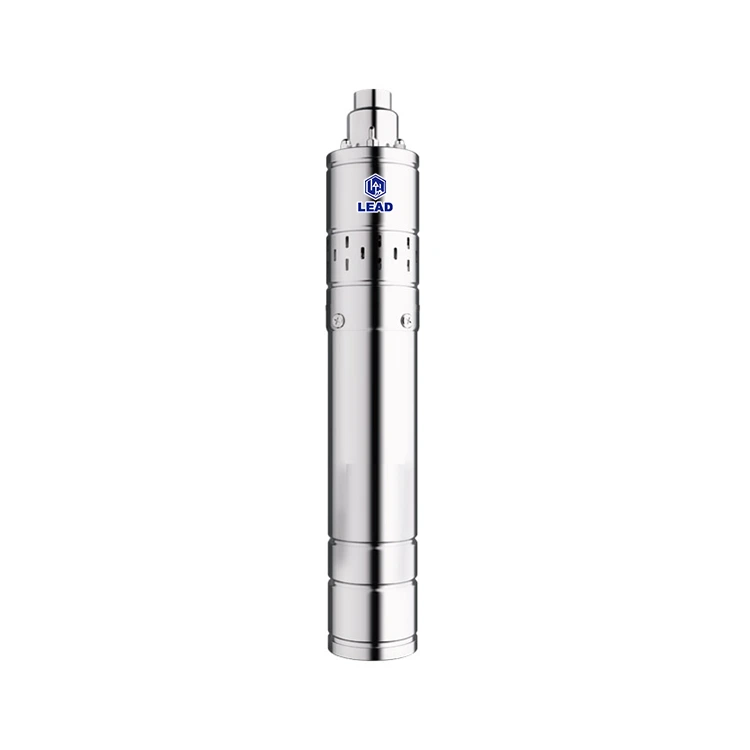
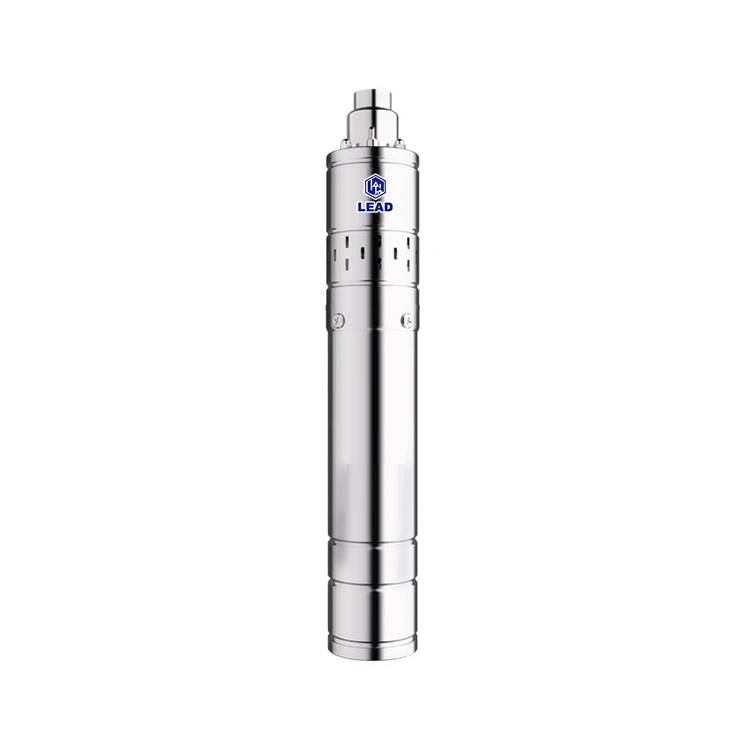
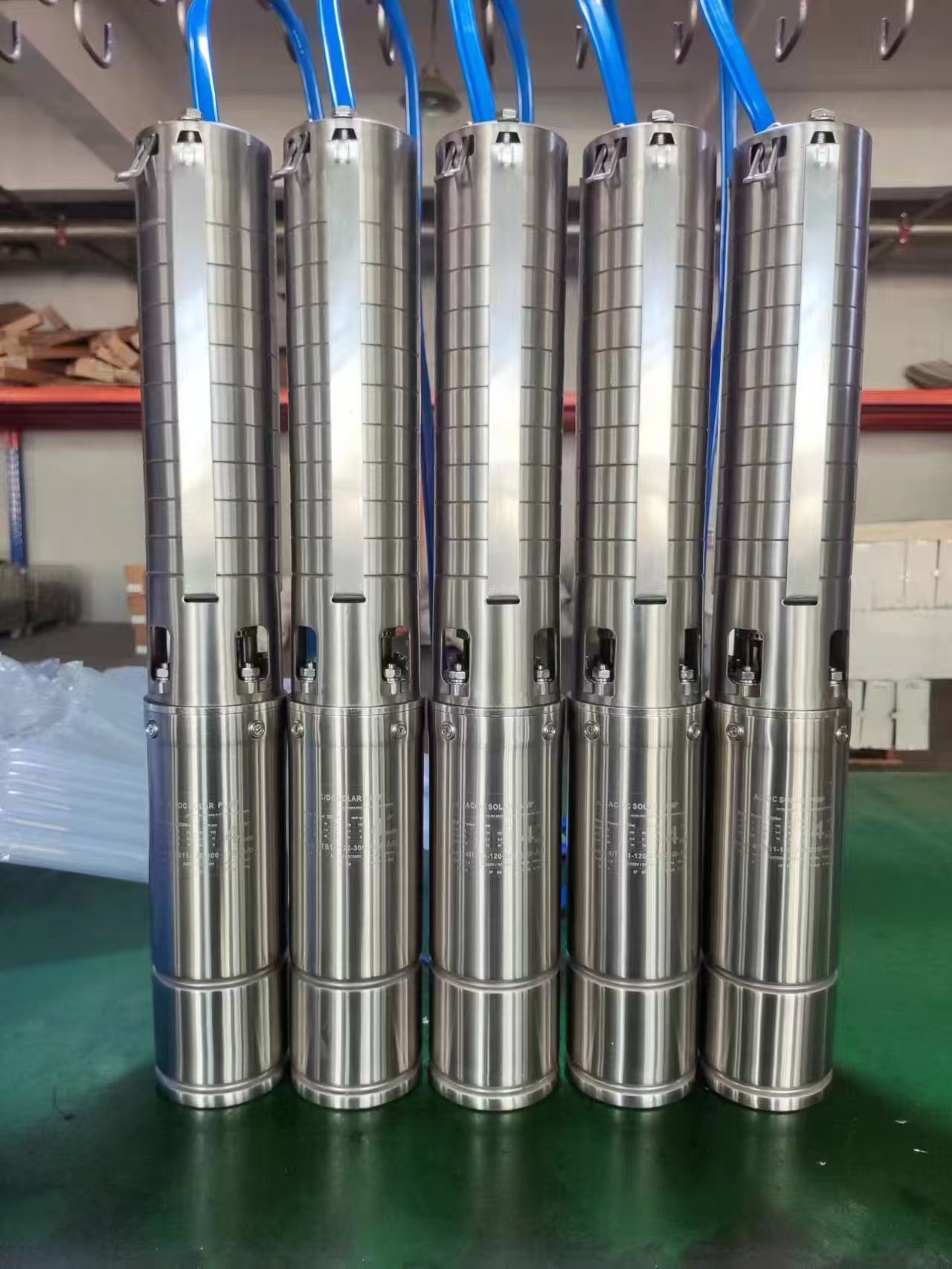
3-inch solar pump — outside diameter around 75 mm. It fits 3-inch and larger boreholes with a practical clearance of 10–15 mm (a casing inside diameter of about 80–90 mm and up).
4-inch solar pump — outside diameter around 95 mm. It needs a 4-inch or larger borehole, typically a casing inside diameter of 100–110 mm and up.
The clearance rule is non-negotiable
The well casing is never perfectly straight, and a pump that scrapes or jams on the way down can cost you the pump, the cable and a service call. Always leave at least 10 mm — preferably 15 mm — of clearance all round.
The good news: because a 3-inch pump is only slightly slimmer, it can also be dropped into a 4-inch, 5-inch or 6-inch well. The reverse is never true. A 3-inch pump keeps your options open; a 4-inch pump commits you to a 4-inch-or-larger well.
2. Side-by-Side Comparison
Specification comparison of 3-inch and 4-inch solar deep well pumps
Specification
3-Inch Solar Deep Well Pump
4-Inch Solar Deep Well Pump
Pump outside diameter
≈75 mm (fits from 3" casing up)
≈95 mm (fits from 4" casing up)
Typical minimum borehole ID
80–90 mm
100–110 mm
Typical power range
0.37 – 2.2 kW (0.5 – 3 HP)
0.37 – 7.5 kW (0.5 – 10 HP)
Typical flow range
Low — roughly 0.5 – 8 m³/h
Medium to high — roughly 1 – 30 m³/h
Typical head capability
Higher head per stage — strong in deep, narrow wells
High flow at moderate head — stronger in wide wells
Best for
Small/tight boreholes, deep static water level, low daily volume
Large boreholes, irrigation, village supply, higher daily volume
Motor style
DC brushless (solar direct) or AC/DC hybrid
DC brushless (solar direct) or AC/DC hybrid
Impeller options
Plastic or stainless steel
Plastic or stainless steel
Solar drive
MPPT controller, battery-free operation
MPPT controller, battery-free operation
Relative cost
Lower for equal flow in a narrow well
Higher output per unit, more water per hour
3. When a 3-Inch Solar Pump Is the Right Choice
Your borehole is 3-inch (or a tight 4-inch) — anything wider simply will not go in.
The water level is deep and you need high head more than high flow — for example a 60–120 m lift into a hilltop tank.
Your daily requirement is modest: a household, a small garden, a few dozen head of livestock, or a drip-irrigation plot.
You have limited panel space or a lower budget, and want to keep the array small.
You want a pump that will also fit your next, larger well — 3-inch keeps you flexible.
A 3-inch pump is small, but it is not weak. With a high-speed brushless motor it can lift several dozen metres on a handful of panels, which is exactly what a deep, narrow borehole needs. See the full 3-inch solar submersible pump range for power and head options.
4. When a 4-Inch Solar Pump Is the Right Choice
Your borehole is 4-inch or larger — you have the room, so use it.
You need real volume: crop irrigation, a village of several hundred people, a livestock ranch, or tank filling for a whole day's demand.
The water level is shallow to moderate (up to roughly 60–80 m), where a wide pump can push a lot of water without huge head.
You expect to grow — a 4-inch platform scales up in power and flow far beyond what a 3-inch body can hold.
You want the widest choice of impeller and voltage options, including higher-power AC/DC hybrid models for a mains or generator boost.
For most agricultural and community projects where the well allows it, the 4-inch pump is the workhorse: more water per hour, more headroom, and a longer upgrade path. Compare models in the 4-inch solar submersible pump range.
Rule of thumb
Narrow well → 3-inch, sized on head. Wide well → 4-inch, sized on flow. When the well can accept either size, let your daily water demand decide, not the price tag.
5. What Both Sizes Have in Common
Diameter is the difference; the technology underneath is the same, and it is where the real day-to-day performance comes from:
Brushless DC motor with high-speed design — high efficiency, no brushes to wear out, long service life.
MPPT controller — tracks the solar array's maximum power point all day so the pump keeps running as light changes.
Battery-free operation — the storage tank is the energy store, which keeps the system simple and cheap.
Built-in dry-run protection — stops the pump before the well runs dry and the motor burns out.
AC/DC hybrid option — runs from panels in the day and can be switched to mains or a generator when needed.
Stainless steel shaft and hardware with a corrosion-resistant body — built for sandy, iron-rich or slightly saline water.
6. How to Size the Pump: Head First, Then Flow
Once you know which diameters your well will accept, sizing is a two-step calculation. Get these two numbers right and either size will perform; get them wrong and no size will.
Step 1 — Total head (in metres)
Vertical lift: from the dynamic water level to the highest point of discharge (tank top).
Drawdown: how far the water level drops while the pump is running — measure it while pumping.
Pipe friction loss: roughly 1 m of head for every 10 m of horizontal pipe, plus losses from bends and valves.
Discharge pressure: add ~10 m for every 1 bar of pressure you need at the outlet.
Add a 10–15% safety margin, and always size on the dynamic (pumping) level, never the static one.
Step 2 — Flow (m³/h or m³/day)
Multiply daily demand per person, per head of livestock, or per hectare, then divide by the usable sunshine hours.
Remember the pump only runs at full output around midday — plan on the realistic mid-morning-to-afternoon window, not the whole day.
Pick the pump whose rated duty point sits at your head and flow, not at its maximum free-flow figure.
Get an exact model, not a guess
Send us the dynamic water level, the casing inside diameter and your daily water requirement, and our engineers will size the exact 3-inch or 4-inch model and the matching solar array.
Clearance: 10 mm minimum, 15 mm preferred, all round — tighter wells make a 4-inch pump a gamble.
Safety rope: always hang a stainless steel rope from the lifting eye, whatever the size. The cable and hose carry nothing.
Cable ties: secure the pump cable every 1.5–2 m with light ties — never crush the insulation.
Position: leave at least 1 m of clear water below the intake so the pump never sits in sediment.
Deep and narrow wells: the deeper and narrower the well, the more a 3-inch high-speed pump (rather than a big 4-inch) is the correct answer.
8. Common Sizing Mistakes
Choosing a 4-inch pump for a 4-inch casing with no clearance to spare — it jams.
Sizing on static water level instead of dynamic — you get half the flow expected.
Ignoring pipe friction and pressure head, so the pump cannot reach the tank.
Buying on flow alone and forgetting head, or the reverse.
Forgetting that a 3-inch pump can fit a bigger well, but not the other way round.
Oversizing the pump so the well is pumped dry and the dry-run protection trips all day.
9. Quick Decision Guide
Your situation
Recommended size
Borehole inside diameter 80–95 mm (tight)
3-inch — and confirm clearance before ordering
Borehole inside diameter 100 mm or larger
4-inch if you need flow; 3-inch if you need only high head
Water level deeper than ~70–80 m
3-inch high-head (or a screw pump for very high head, low flow)
Household / small garden / few livestock
3-inch
Crop irrigation / village / ranch
4-inch
You may drill a bigger well later
3-inch now — it fits both wells
Highest volume for the money, wide well
4-inch
10. FAQ
Can I put a 4-inch pump in a 4-inch borehole?
Only if the casing's inside diameter leaves at least 10–15 mm of clearance around the pump body. Many "4-inch" wells are actually tighter than that. When in doubt, choose the 3-inch pump — it is the safe option and still delivers high head.
Is a 3-inch pump weaker than a 4-inch pump?
A 4-inch pump can hold more stages and larger impellers, so it reaches higher flow and power. But for a deep, narrow well a 3-inch high-speed pump can out-lift a bigger pump that physically will not fit or cannot be fed enough water.
Which is better for a deep well — 3-inch or 4-inch?
For very deep wells the constraint is usually head, and a 3-inch high-speed or screw pump is often the right tool. For deep-but-wide wells with a high volume requirement, a 4-inch pump at the correct power does the job. The well diameter decides, not the depth alone.
Do both sizes work without batteries?
Yes. Both run battery-free on an MPPT controller, storing energy as water in the tank. AC/DC hybrid versions of each are available if you need mains or generator backup.
How much power do they need?
It depends on the head and flow, not the diameter. Lead Pump's solar pump range spans 220 W to 15,000 W — give us your head and daily volume and we will size the array too.
What is the warranty?
2 years on the pump body and 1 year on the controller, with replacement of any faulty unit (FOB China, no questions asked).
Can I get samples before a full order?
Yes — 1 to 5 units for testing. Wholesale is 50+ units per model, and OEM starts at 50 units per model with custom branding, packaging and voltage/frequency.
Dealer & OEM Information
Sample orders
1–5 units for testing.
Wholesale
50+ units per model.
OEM
50 units per model minimum, with customized branding, packaging and voltage/frequency options.
About Taizhou Lead Pump Co., Ltd.
Taizhou Lead Pump Co., Ltd. is based in Taizhou, Zhejiang — China's core pump manufacturing region — with more than ten years of focus on pump R&D and production. Products cover 220 W to 15,000 W, including 3-inch, 4-inch and 6-inch solar submersible deep-well pumps, solar surface pumps, screw pumps, centrifugal pumps, self-priming pumps, sewage pumps, fountain pumps and expansion tanks. All products carry CE, RoHS and ISO 9001:2015 certification.
Lead Pump holds local company accounts in Nigeria, Tanzania, Kenya, South Africa, Ghana and Cameroon, so African dealers can pay in local currency. Technical support is available in Chinese, English and French, with delivery in 15–25 working days.
Talk to a solar pump engineer
Send your borehole diameter, dynamic water level and daily water demand — we will reply with a sized pump, array and quotation.
We use cookies to offer you a better browsing experience, analyze site traffic and personalize content. By using this site, you agree to our use of cookies. Privacy Policy