Why the cheapest pump to buy is usually the most expensive pump to own - and how to run the numbers for your own site.
A 5.5 kW borehole duty costs about $9,400 on solar, $4,300 on diesel and $5,200 on grid at installation. Over ten years, the same duty costs roughly $12,600 on solar, $73,800 on diesel and $27,000 on grid - before fuel price escalation. Diesel's sticker-price advantage disappears after roughly 900 operating hours; most irrigation and village supply sites run 2,000+ hours a year. The right answer is often a hybrid: solar for daytime duty, grid or diesel for night and monsoon backup.
A pump is bought once and paid for every day. That simple asymmetry explains why two quotes for the same borehole - one diesel at $4,300, one solar at $9,400 - can both be honest, and yet one of them is far cheaper over the life of the project. The purchase order looks at year zero. The water bill looks at year ten.
This guide builds a like-for-like comparison for a realistic 5.5 kW borehole duty, separates capital cost from operating cost, tests the result against fuel prices and running hours, and sets out the conditions under which each option - solar, diesel, grid or a hybrid - is genuinely the better buy.
Diesel is cheap to install and expensive to run. A diesel pump set is a mature, simple package: engine, pump end, suction and discharge, a shed and a fuel tank. It starts on demand and does not care about clouds. But every hour of operation consumes fuel that must be purchased, transported, stored and protected - and the engine needs filters, oil and rebuilds.
Grid power is the cheapest energy per kWh where it is reliable. The complication is that the grid is often not reliable at the exact moment and location where water is needed. Connection cost can also exceed the pump itself, and low-voltage sag is a quiet killer of motors and controllers.
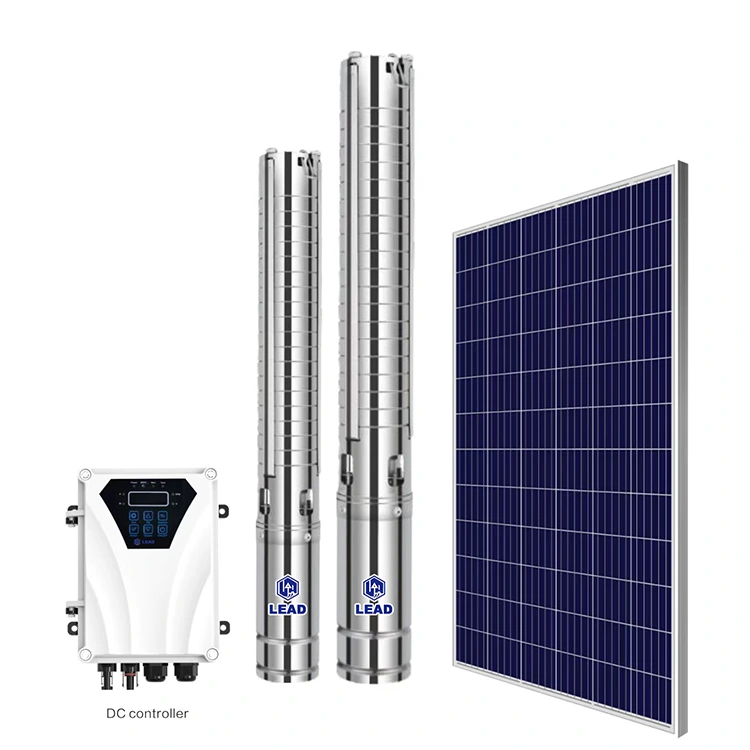
Solar has the highest capital cost and the lowest running cost. There is no fuel, no engine oil and very little to service. The trade-off is that energy production is fixed by the weather and the clock: a solar pump delivers most of its water between mid-morning and late afternoon, so the system must be designed around a tank, not around the tap.
Comparing these three on purchase price is therefore not a comparison at all. The only fair basis is total cost of ownership (TCO): everything spent from installation to the tenth year, divided by the water actually delivered.
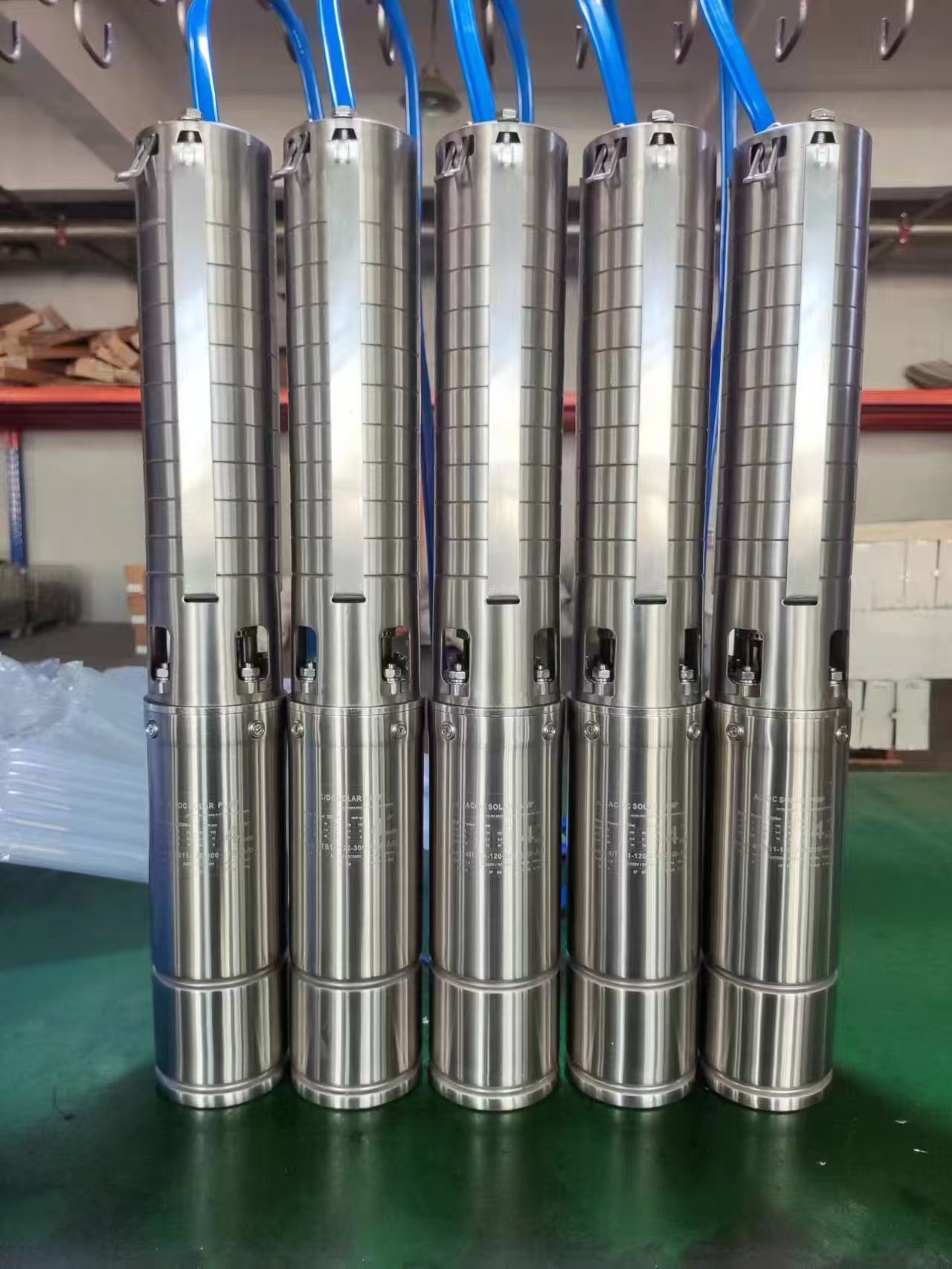
To keep the comparison honest, all three options are sized for the same hydraulic duty: 10 m³/h at 90 m of total head, eight hours a day, 300 days a year. That is 80 m³ a day and 24,000 m³ a year - a mid-sized irrigation block, a livestock operation or a village water supply. The reference pump is our 4SD16-136-4-inch DC solar pump, 4 kW motor, maximum flow 16 m³/h, maximum head 136 m. On its factory performance test report (No. 202504160140, 16 April 2025) it delivered 10.04 m³/h at 99.1 m of head, drawing 5.36 kW at 50.6% wire-to-water efficiency. The 10 m³/h at 90 m figure is the design duty point used for the cost comparison; the tested curve passes it with roughly 10% head margin, and the 5.36 kW measured input is what the 5.5 kW energy model below is built on.
|
Parameter |
Value |
Comment |
|
Reference pump |
4SD16-136-DC550-4000 |
4-inch DC solar pump, 4 kW motor, DC 550 V |
|
Max. flow / max. head |
16 m³/h / 136 m |
Nameplate maximums of the reference pump |
|
Tested duty (factory report) |
10.04 m³/h at 99.1 m |
5.36 kW input, 50.6% efficiency |
|
Design duty point |
10 m³/h at 90 m |
Total head includes lift, drawdown, friction |
|
Operating schedule |
8 h/day × 300 days |
2,400 hours per year |
|
Annual water volume |
24,000 m³ |
80 m³ per day |
|
Site condition |
Off-grid borehole |
No reliable grid within economic connection distance |
|
Diesel price |
USD 1.20/L |
Typical remote-site delivered price, 2026 |
|
Grid tariff |
USD 0.15/kWh |
Where a connection is available |
|
Currency |
USD |
Indicative export prices, excl. duty and taxes |
Table 1. Reference duty used throughout this comparison.
The 90 m total head is deliberate: 60 m static lift, 10 m drawdown at the design flow, and 20 m of friction and fittings. Sites that quote only "well depth" routinely undersize the pump by 20-30%, which is one of the most common reasons a new solar pump disappoints in its first week.
The solar package carries the highest invoice because it includes the power plant. The diesel package is the cheapest because the fuel infrastructure is small and the engine is mass-produced. Grid sits in between but only if a connection already exists nearby.
|
Cost item |
Solar |
Diesel |
Grid |
|
Pump, motor and drive |
$3,200 |
$2,900 |
$1,300 |
|
Energy source |
$3,600 (9 kWp PV) |
Included in pump set |
$3,200 (connection / transformer share) |
|
Mounting, cables, civil works |
$2,600 |
$1,400 (shed, tank, foundation) |
$700 (cable, protection, earthing) |
|
Total installed cost |
$9,400 |
$4,300 |
$5,200 |
Table 2. Indicative installed capital cost for the reference duty, USD.
Two caveats matter. First, a new grid connection can cost anywhere from zero - where a service already exists - to well over $10,000 where a transformer and a line extension are required. Second, the solar figure assumes a professionally mounted array with lightning protection and a properly sized cable; the cheap version of this package usually reappears later as a controller failure.
Diesel consumes about 2.1 litres per hour at this duty, or roughly 5,040 litres a year. At $1.20 per litre that is $6,048 a year in fuel alone - more than the entire diesel pump set, every single year. Solar's fuel line is zero. Grid's energy line is real but modest: 13,200 kWh at $0.15 is $1,980 a year.
Table 3. Indicative annual operating cost, USD.
|
Annual cost |
Solar |
Diesel |
Grid |
|
Fuel or electricity |
$0 |
$6,048 (5,040 L) |
$1,980 (13,200 kWh) |
|
Routine maintenance |
$240 |
$500 |
$200 |
|
Overhauls / replacements reserve |
$40 |
$400 |
$0 |
|
Total per year |
$280 |
$6,948 |
$2,180 |
The diesel maintenance figure covers filters, engine oil, injector service and general labour. The overhaul reserve assumes a top-end rebuild roughly every 6,000 hours at about $900, which at 2,400 hours a year means a rebuild every two and a half years. Solar's replacement reserve covers a controller replacement around year six to eight; the PV modules themselves are expected to last 20-25 years.
Put the two halves together and the picture inverts. Diesel wins year zero by $5,100 and loses every year after that by more than $6,600. By year ten the gap is over $60,000 - enough to buy the solar system six times over.
|
10-year cost |
Solar |
Diesel |
Grid |
|
Capital cost |
$9,400 |
$4,300 |
$5,200 |
|
Fuel / electricity |
$0 |
$60,480 |
$19,800 |
|
Maintenance |
$2,400 |
$5,000 |
$2,000 |
|
Overhauls / replacements |
$400 |
$4,000 |
$0 |
|
Total, 10 years |
$12,600 |
$73,780 |
$27,000 |
|
Cost per m² of water |
$0.053 |
$0.307 |
$0.113 |
Table 4. Ten-year TCO and unit water cost, before fuel escalation. 240,000 m delivered.
The cost per cubic metre is the number that matters for irrigation, livestock and municipal budgeting. At this duty, solar water costs about five cents per cubic metre; diesel water costs about thirty cents. For a farm applying 4,000 m³ a month, that is the difference between roughly $210 and $1,230 in monthly pumping cost.
The diesel case above uses a flat $1.20 per litre for ten years. Fuel does not behave that way. A 3% annual increase - below the ten-year average in most import-dependent markets - adds about $8,900 to the diesel total, pushing it past $82,000. A move to $1.80 per litre pushes it past $100,000.
|
Diesel price (USD/L) |
10-year fuel cost |
10-year TCO |
Extra cost vs solar |
|
0.70 |
$35,280 |
$48,580 |
+$35,980 |
|
0.90 |
$45,360 |
$58,660 |
+$46,060 |
|
1.20 |
$60,480 |
$73,780 |
+$61,180 |
|
1.50 |
$75,600 |
$88,900 |
+$76,300 |
|
1.80 |
$90,720 |
$104,020 |
+$91,420 |
Table 5. Sensitivity of the diesel case to fuel price, 10 years, 2,400 hours per year.
This is also why diesel looks more attractive in markets with heavily subsidised fuel. At $0.70 per litre the ten-year gap is still about $36,000, but the payback on the solar premium stretches from under a year to roughly two and a half years - still short, but no longer obvious to a buyer comparing invoices.
The solar system costs $5,100 more than the diesel system and saves about $6,670 a year in fuel and maintenance. Simple payback on the extra capital is therefore around nine months at 2,400 operating hours a year. At 1,200 hours - a more typical irrigation season in many regions - it is about 1.6 years. Where diesel is subsidised to $0.70 per litre, it stretches to roughly 2.5 years.
Two adjustments keep this honest. First, payback should be calculated on the incremental cost, not the full solar invoice, because the diesel alternative also costs money. Second, it should include the cost of the fuel you did not have to haul, guard or lose. Operators commonly report 10-30% of diesel disappearing between the depot and the tank; that loss is not in any quotation, but it is in the monthly cash book.
TCO is a useful discipline, but it still flattens several costs that decide real projects:
|
Site condition |
Best default |
Why |
|
Reliable grid, fewer than 8 outage hours a month |
Grid, or AC/DC hybrid |
Lowest capital cost and lowest energy cost per m³ |
|
Grid present but unreliable (20-50% outages) |
Solar + grid hybrid |
Solar carries daytime load; grid covers nights and cloudy spells |
|
Off-grid, more than 1,000 operating hours a year |
Solar |
Fuel savings repay the premium in under two years |
|
Off-grid, under 600 hours a year, small duty |
Diesel may still pencil out |
Low utilisation cannot amortise the PV array; consider a shared or portable set |
|
Night operation is essential |
Solar + tank, or hybrid |
Storage is cheaper than batteries for most water duties |
|
Fuel delivery is difficult or insecure |
Solar |
Removes the logistics and theft exposure entirely |
|
Seasonal or monsoon climate |
Hybrid |
Solar in the dry season, grid or diesel in the wet season |
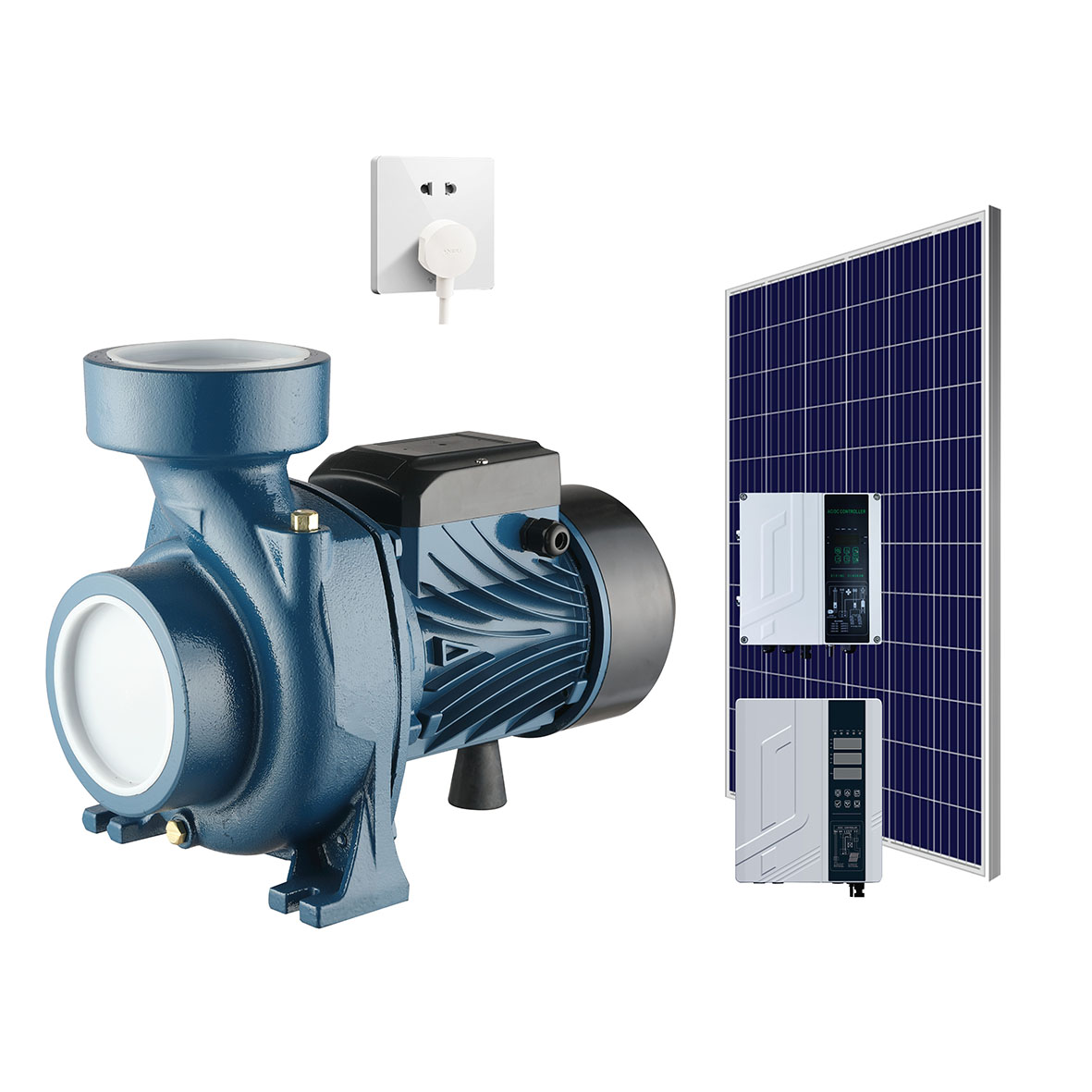
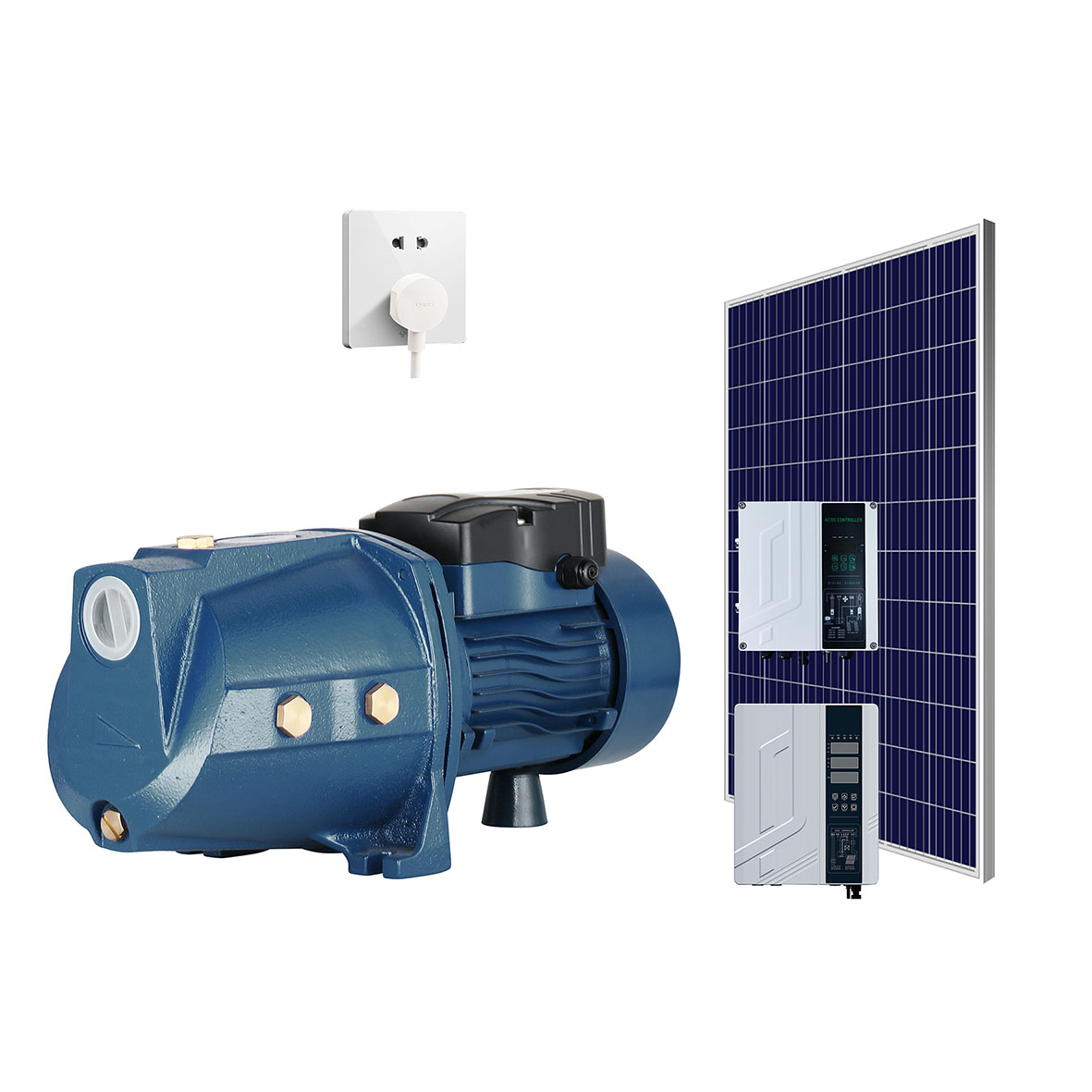
The most common mistake in off-grid pumping is treating the choice as a religion. A hybrid system - solar array, MPPT controller and an AC/DC dual-drive pump - uses solar whenever the sun is available and switches to grid or a generator when it is not. The pump itself is the same; only the controller and changeover logic are different.
For a village supply or a dairy that cannot stop at sunset, the hybrid usually beats both pure options. The tank is sized for one to two days of demand, the solar array covers the daytime base load, and the backup source runs only during the gap. In practice that means a much smaller generator, far fewer running hours, and a fuel bill that falls by 70-90% rather than disappearing entirely.
LEAD PUMP builds AC/DC dual-drive systems from 220 W to 15,000 W, with MPPT control, dry-run protection and automatic source changeover. The right split between PV and backup is a sizing exercise, not a catalogue choice - it depends on the worst week of the year, not the best one.
A: Over ten years, at more than about 900 operating hours a year, yes - usually by a wide margin. Below that, the lower capital cost of a diesel set can still win on pure cash flow, especially where fuel is subsidised. The crossover depends on fuel price, hours and maintenance, which is why the calculation should be run for the specific site.
A: For an off-grid site running six to eight hours a day, the extra cost of solar over diesel typically pays back in one to two years. At two hours a day it can take four to six years. A hybrid usually pays back fastest where grid outages are frequent but a connection already exists.
A: The pump produces less, and the tank carries the demand. For critical supply, size the tank for two to three days rather than adding batteries; water storage is far cheaper per kWh than electrochemical storage.
A: Yes. An AC/DC hybrid pump accepts both sources and switches automatically. The generator then runs only when the solar array cannot meet demand, which cuts its hours and fuel consumption sharply.
A: Typically 20-25 years, with output degrading slowly to about 80% of the initial rating. Controllers usually need replacement around year six to ten; pumps typically last 10-15 years depending on water quality and run hours.
A: Less than a diesel set, but not zero. Clean the array weekly in dusty conditions, inspect wiring and mounts quarterly, check the pump's flow and current annually, and keep the borehole screen clear. Most failures come from water quality, cable damage or lightning, not from the panels.
A: Not directly from the array. It can run whenever irradiance is sufficient, and a hybrid system can run at night from grid or generator. For true 24/7 duty, design around a tank and a hybrid source rather than an oversized array.
A: Usually 7.5-9 kWp, depending on latitude, season, total head and pump efficiency. The array must be sized for the worst month you intend to pump, not the annual average, and the MPPT window must be checked at high temperature.
The cheapest pump is rarely the cheapest water. Diesel's low invoice is a loan against future fuel bills; grid's low tariff is only real where the voltage is. Solar's high upfront cost buys twenty years of near-zero energy, and a hybrid buys the reliability that neither pure option can guarantee on its own.
Run the numbers for your own duty point before you choose. Four inputs decide most of the answer: daily water demand, total head, annual operating hours and the local price of diesel or grid power. Everything else is detail.
Note: all prices are indicative 2026 export-market figures in USD (FOB, excluding duty and local taxes), used to demonstrate the comparison method - not a quotation.
Taizhou Lead Pump Co., Ltd. manufactures solar water pumps and a full range of submersible, centrifugal, jet and sewage pumps from 220 W to 15,000 W. We build both the pump and the controller, so we can size a complete system around your well, head, flow, sunlight and grid conditions. Products carry CE, RoHS and ISO 9001:2015 certification.
Website: www.zjleadpump.com
Email: sales01@zjleadpump.com - WhatsApp: +86 195 6006 2010 - MOQ: 50 sets per model for OEM; samples 1-5 sets; wholesale 50+ sets per model - Warranty: 1 year on both the pump and the controller - replacement, no questions asked (FOB China) - Africa: local company accounts in Nigeria, Tanzania, Kenya, South Africa, Ghana and Cameroon; local currency payment available
Want this model run on your own project? Send four numbers - daily water demand, total head, operating hours and your local diesel or grid price - and our engineering team will return a side-by-side calculation and a full system proposal within 24 hours.